

Before you can tackle a rodent problem, it helps to know whether you’re dealing with a mouse or a rat. Both are common pests in London, where houses, flats, restaurants, gardens and commercial buildings provide plenty of opportunities to find food and shelter. However, mice and rats behave differently, leave different signs and can require different approaches to pest control.
The good news is that you don’t necessarily need to catch sight of the animal to work out which one has moved in. Its size, droppings, feeding habits and the damage it leaves behind can all provide useful clues. This post looks at some facts about rats and mouse control that might help you assess the situation more accurately.
General Differences These Two Rodents Display
The most obvious differences are their size and appearance, but there are several other clues to look for. Adult rats are generally much larger and heavier than house mice, with thicker tails and broader heads. Mice are smaller, more delicate looking and can squeeze through tiny openings.
It can be harder to tell them apart when you see a young rat, as it may be similar in size to an adult mouse. Looking at several signs together is therefore more reliable than judging by size alone.

Body Size and Appearance
An adult house mouse typically has a body around 7–10cm long, excluding its tail. Its ears appear relatively large in proportion to its head, its muzzle is pointed, and its body is slender.
A fully grown brown rat, the species commonly encountered in London, usually has a body around 20–27cm long, excluding its tail. It has a heavier body, a blunter muzzle, and smaller-looking ears relative to its head.
These measurements are approximate, as individual animals vary. A young rat may easily be mistaken for a mouse, particularly if it is seen only briefly.
If you spot a rodent in your home, try to remember its overall shape rather than concentrating solely on its length. A thick-set animal with a broad head is more likely to be a rat, while a small, fine-featured animal is more likely to be a mouse.
The Difference Between Mouse and Rat Droppings
Droppings are often one of the clearest signs of a rodent problem, even when the animal itself remains hidden.
Mouse droppings are small, typically around 3–7mm long, and resemble dark grains of rice. They often have pointed ends and may be found in cupboards, drawers, food storage areas and behind kitchen appliances.
Rat droppings are considerably larger, commonly around 12–20mm long, although their size varies. Fresh brown rat droppings are often dark and capsule-shaped, with blunt ends.
Location of droppings can also help. Mice tend to leave them close to feeding areas, nesting sites and their regular routes. Rats may leave droppings along established paths, near food sources or around sheltered areas where they spend time.
Both types of droppings can contaminate surfaces and food. Avoid sweeping or vacuuming them when dry, as this can release contaminated particles into the air. Use an appropriate cleaning and disinfection method, and follow health and safety guidance.

Body Weight
Adult house mice generally weigh around 12–30g, while adult brown rats commonly weigh approximately 200–500g. Rats can grow heavier where food is plentiful, and size and weight vary between individuals.
This weight difference helps explain why rats can cause more substantial physical damage. Their larger bodies and powerful jaws allow them to gnaw through materials that may be more difficult for mice to damage.
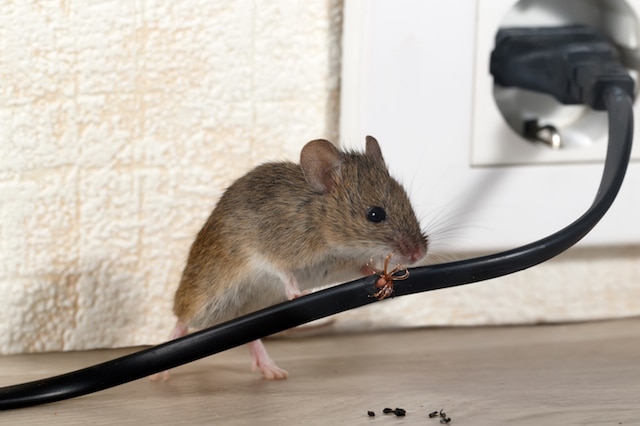
However, a mouse should never be dismissed as harmless. Mice can create health risks when they contaminate food, damage belongings and gnaw electrical cables, despite their small size.
Tail Size and Shape
Both mice and rats have long, mostly hairless tails, but there are noticeable differences.
A house mouse’s tail is generally around 7–10cm long and is often approximately as long as its body. It is slender and relatively delicate.
A brown rat’s tail is usually thicker and longer, often around 15–22cm. It may be longer than the animal’s body, although proportions vary.
If you catch a glimpse of a rodent running along a skirting board or across a garden, the tail can help with identification. A thicker tail combined with a heavy body suggests a rat, while a finer tail and smaller frame are more typical of a mouse.
How Quickly Do Mice and Rats Reproduce?
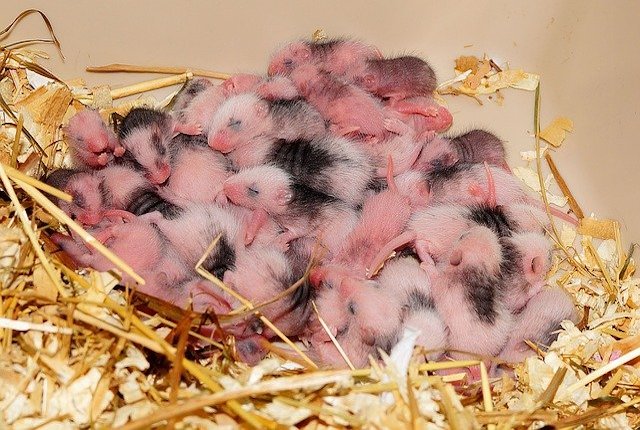
Both these rodents reproduce quickly when conditions are favourable, which is one reason it is worth dealing with an infestation early.
Female house mice can begin breeding at around six weeks of age, although the timing varies. A typical litter contains around 4–8 young, and females can produce several litters a year. Under optimum indoor conditions, breeding can continue throughout the year.
Brown rats generally mature later, often at around two to three months. Their litters commonly contain quite a few young, sometimes around 6–12, and females can produce multiple litters annually when food and shelter are readily available.
These figures are typical ranges rather than guarantees. Actual reproduction depends on factors such as quantity of food, temperature, the animal’s age and the conditions in which they live.
For London properties, warmth and readily available food can allow both species to remain active throughout the year. A small problem can therefore grow substantially if rodents have access to a suitable nesting site.
Feeding Habits
Mice and rats are both omnivores, meaning they can eat a wide variety of foods. However, their feeding patterns can differ.
House mice commonly feed on cereals, grains, seeds and other foods found in kitchens, cupboards and storage areas. They tend to nibble small amounts at several locations and may explore new food sources cautiously.
Brown rats eat a much wider range of foods, including discarded food, grains, fruit and vegetables as well as meat and insects. In London, they can find food around household bins, restaurants, takeaway premises, gardens and poorly maintained waste storage areas.
Both species can chew through food packaging, so storing food in sealed, robust containers is important. Leaving pet food out overnight or allowing seed to accumulate underneath bird feeders can also provide an easy meal.
The Damage Rats and Mice Can Cause
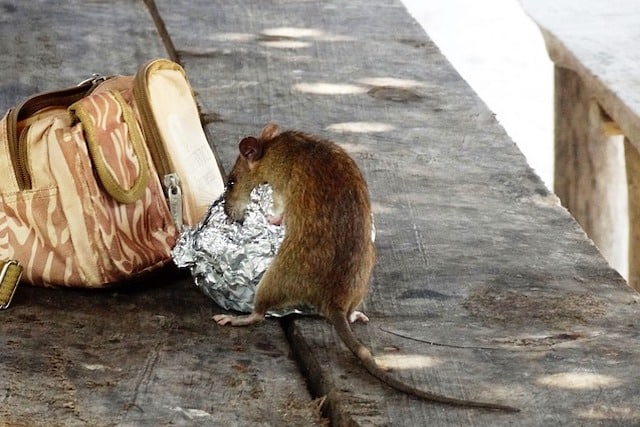
Both of these rodents can damage property, contaminate food and create hygiene concerns, but the scale and type of damage can differ.
Rats have powerful jaws and can gnaw through wood, plastic, packaging and certain building materials. They may damage pipes, insulation and electrical cables, while their size allows them to exploit larger openings in buildings. They can cause a lot of problems, so protecting your property from rats is crucial.
Mice can cause similar problems on a smaller scale. They often nest in wall cavities, loft insulation, cupboards and spaces behind kitchen units. Their gnawing can damage cables and stored belongings, while their droppings and urine can contaminate food storage areas.
In London, older properties can be particularly vulnerable where there are gaps around pipes, damaged air vents, deteriorating brickwork or openings between adjoining buildings. Modern flats can also experience problems when rodents travel through service ducts, ceiling voids and shared spaces.
Where Are You Most Likely to Find Rats And Mice In London?
Although both species can enter homes and businesses, they often favour different places from one another.
Mice are frequently found indoors, particularly in kitchens, lofts, cupboards, wall cavities and spaces behind appliances. They are also common in various workplaces. Their small size allows them to enter through gaps of approximately 6mm, making even minor defects around pipes and cables potential entry points.
Brown rats are often associated with gardens, drains, bin storage areas, basements, commercial waste facilities and outdoor spaces. However, they can also enter houses, basements, lofts and commercial buildings when food and shelter are available.
London’s dense housing, extensive drainage infrastructure and mixture of residential and commercial premises create opportunities for both species. However, sighting in the garden does not necessarily mean rats are nesting inside the property, just as finding a mouse indoors does not automatically indicate a large infestation.
Why Correct Identification Matters
If you’re unsure whether you’re dealing with mice or rats, look for a combination of signs rather than relying on a single clue. If you find several signs in different parts of the property, it is worth investigating promptly. Rodents can remain hidden for long periods, and the visible evidence may represent only part of the problem.
Although mice and rats share some characteristics, identifying which rodent you have helps determine the most appropriate control measures.
Your pest control technician needs to establish where the rodents are active, how they are entering the building and whether there are signs of nesting or breeding. The property’s layout, the presence of children or pets, and any food hygiene requirements, will also influence the approach.
Simply putting down traps without investigating access points can leave the underlying problem unresolved. Sealing suitable gaps, securing food and waste, and using appropriate control methods, are important parts of effective rodent management.
Need Help with Rats Or Mice In Your London Property?
Whether you’ve found tiny droppings in your kitchen or heard a heavier animal moving around your loft, early action can help prevent a small rodent problem from becoming more established.
Diamond Pest Control provides professional mouse and rat control across London for residential and commercial properties. Our technicians can assess the signs, identify the likely species and recommend an appropriate course of treatment.
If you suspect mice or rats in your home or business, contact Diamond Pest Control for expert advice and professional rodent control, and avoid common mistakes people make when trying to deal with rodents on their own.